

Our mutant drums
Our mutant drums
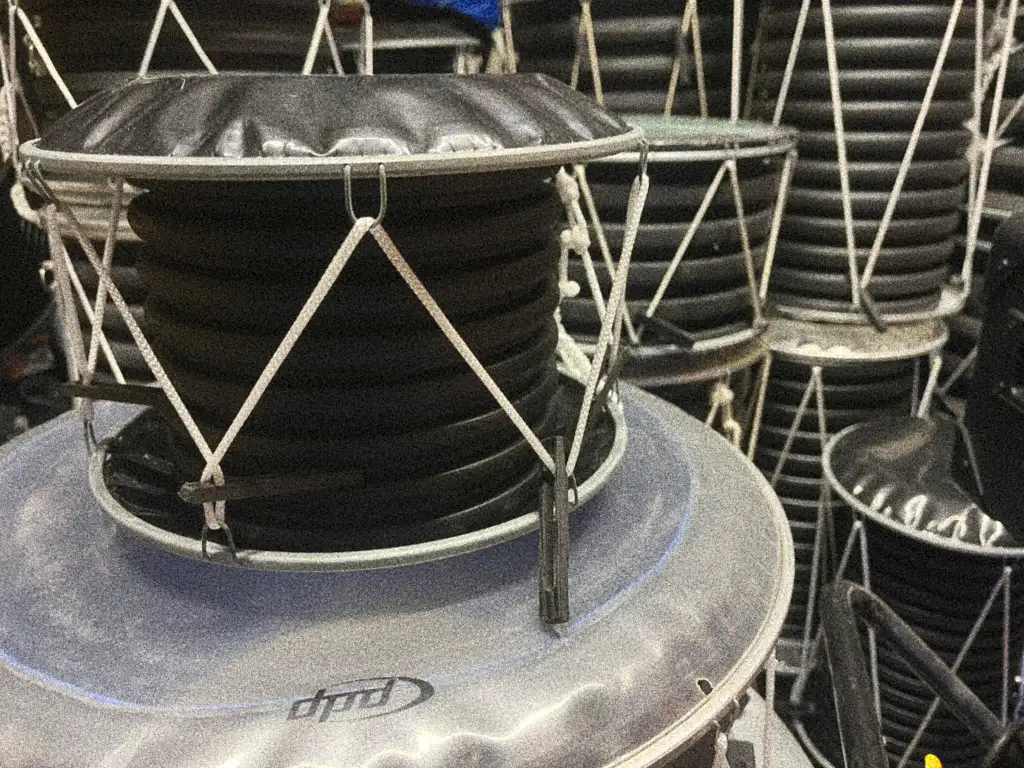
The design is a balance of traditional drum-making techniques and carefully developed new ideas.
Why this drums?
Why this drums?
The O7 drums were designed out of necessity. At the time, Filipe Henda couldn’t afford traditional drums in the numbers he needed. The turning point came through a friend and fellow drummer, Marte Ciro, who had been building his own drums from drainage pipes. From there, Henda began experimenting, simplifying, testing, and refining the design.
The O7 drums were designed out of necessity. At the time, Filipe Henda couldn’t afford traditional drums in the numbers he needed. The turning point came through a friend and fellow drummer, Marte Ciro, who had been building his own drums from drainage pipes. From there, Henda began experimenting, simplifying, testing, and refining the design.

Drainage pipes
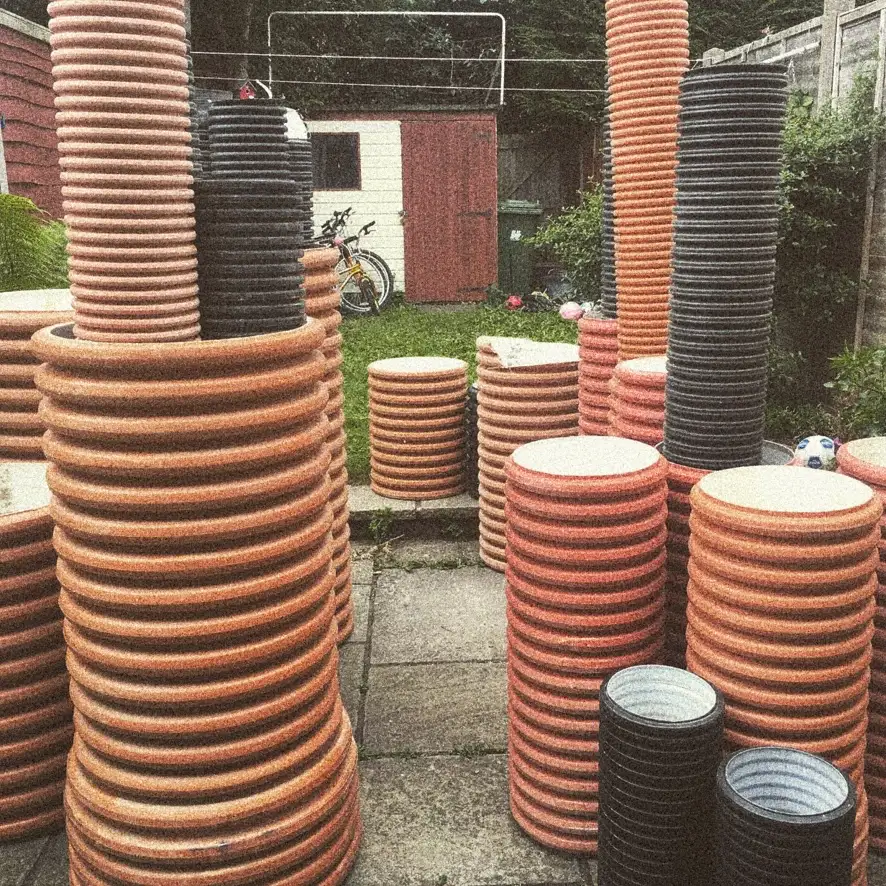
Every O7 Drum begins its life as a drainage pipe. Sourcing them is rarely straightforward. It involves scouting construction sites for discarded cut-offs, tracking down overlooked surplus, or reaching out directly to suppliers willing to part with remnants.
Every O7 Drum begins its life as a drainage pipe. Sourcing them is rarely straightforward. It involves scouting construction sites for discarded cut-offs, tracking down overlooked surplus, or reaching out directly to suppliers willing to part with remnants.
First designs
First designs
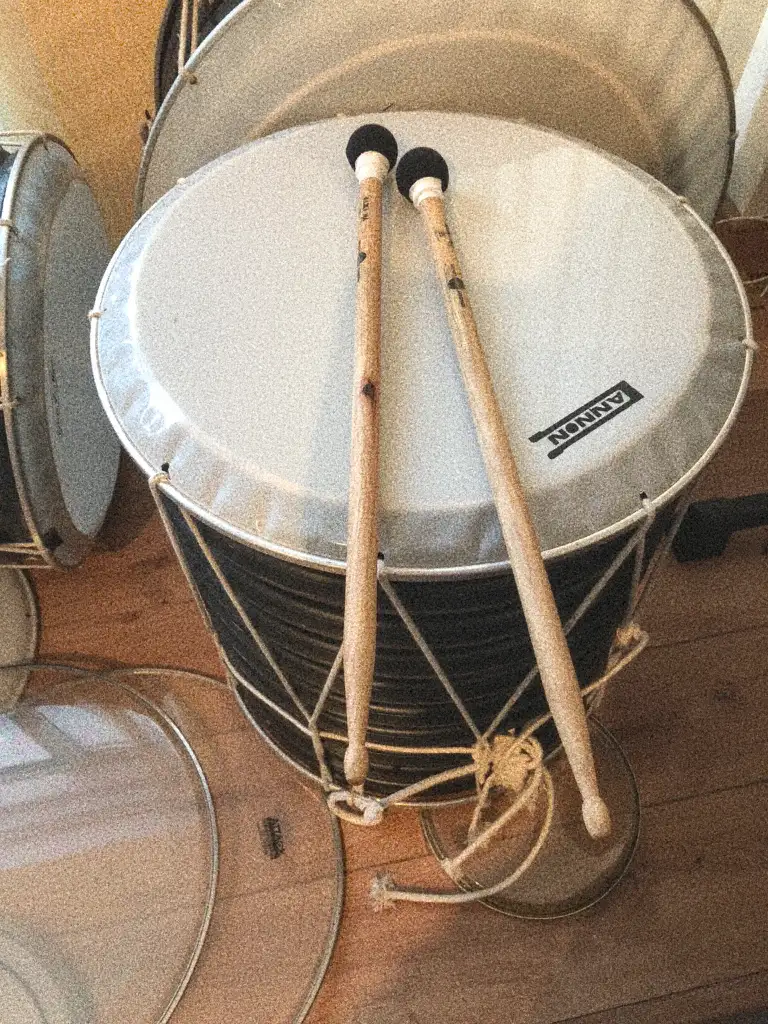
With access to a supply of drainage pipes, donated drumheads from fellow drummers, and rope that was affordable, the first builds began. The early drums followed traditional African rope-tension techniques. But they came with limitations. Each drum required more material than was sustainable: not just two drumheads, but additional rims to create proper tension, either custom-made in metal or salvaged from damaged heads. To scale the project and keep it accessible, a new approach was needed.
With access to a supply of drainage pipes, donated drumheads from fellow drummers, and rope that was affordable, the first builds began. The early drums followed traditional African rope-tension techniques. But they came with limitations. Each drum required more material than was sustainable: not just two drumheads, but additional rims to create proper tension, either custom-made in metal or salvaged from damaged heads. To scale the project and keep it accessible, a new approach was needed.


Getting closer
Over time, a more efficient approach emerged. Inspired by Japanese taiko drums, the design shifted toward using less material without sacrificing tension or sound. Piercing the drumheads themselves felt counterintuitive at first, but the results proved otherwise - it worked. While this version was not yet the final design, it marked a crucial step forward, bringing the project closer to what O7 would become.
Over time, a more efficient approach emerged. Inspired by Japanese taiko drums, the design shifted toward using less material without sacrificing tension or sound. Piercing the drumheads themselves felt counterintuitive at first, but the results proved otherwise - it worked. While this version was not yet the final design, it marked a crucial step forward, bringing the project closer to what O7 would become.
Final designs
Final designs
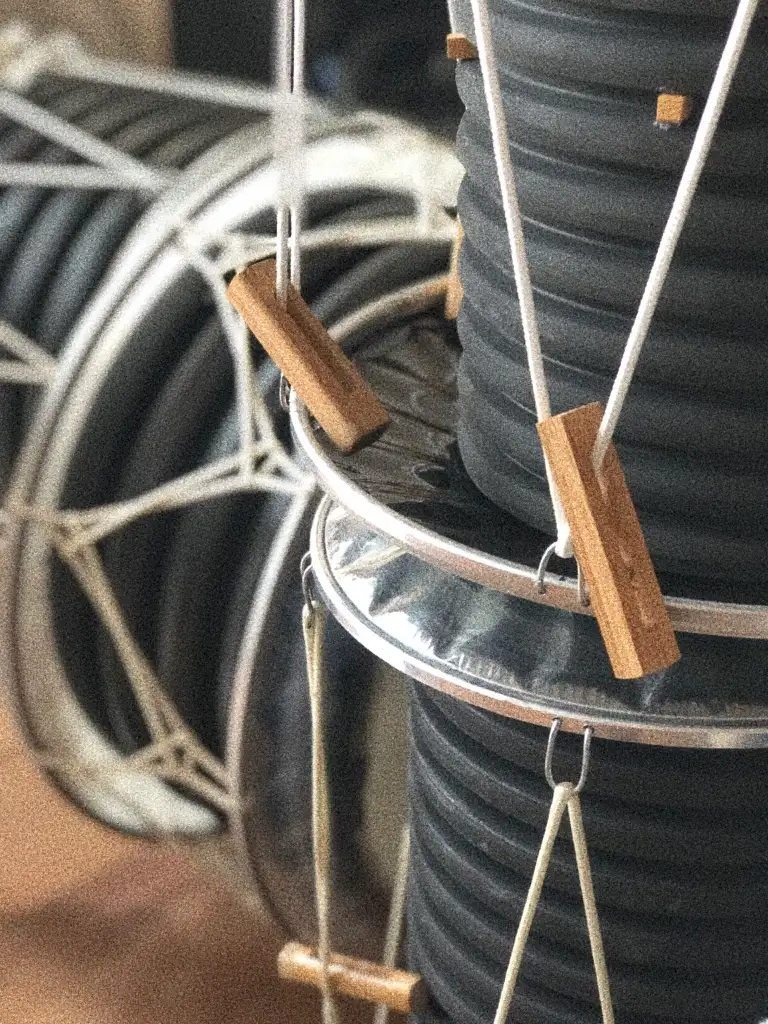
After years of experimentation, trial, error, and constant refinement, the design finally settled into place. A balance of traditional drum-making techniques and carefully developed new ideas brought everything together. It is a design that feels resolved, yet always open to evolution.
After years of experimentation, trial, error, and constant refinement, the design finally settled into place. A balance of traditional drum-making techniques and carefully developed new ideas brought everything together. It is a design that feels resolved, yet always open to evolution.
Making the drums
This short video showcases how the O7 Drum is made. It features one of the earliest designs, created when using mostly traditional African drumhead tensioning techniques.
This short video showcases how the O7 Drum is made. It features one of the earliest designs, created when using mostly traditional African drumhead tensioning techniques.